
Known vulnerabilities, device dependencies and Discovery
Known CVEs for every device and VM, device dependencies with one root-cause alert per outage, and opt-in Discovery of packages and services.
0.20 is a small release with three main additions. Every device and VM gets a list of its known vulnerabilities. You can record which devices depend on which, and see what goes down when one fails. And Discovery can read installed packages and running services from your hosts. The bigger release is the next one: 0.21 brings devices in 3D.
Known vulnerabilities
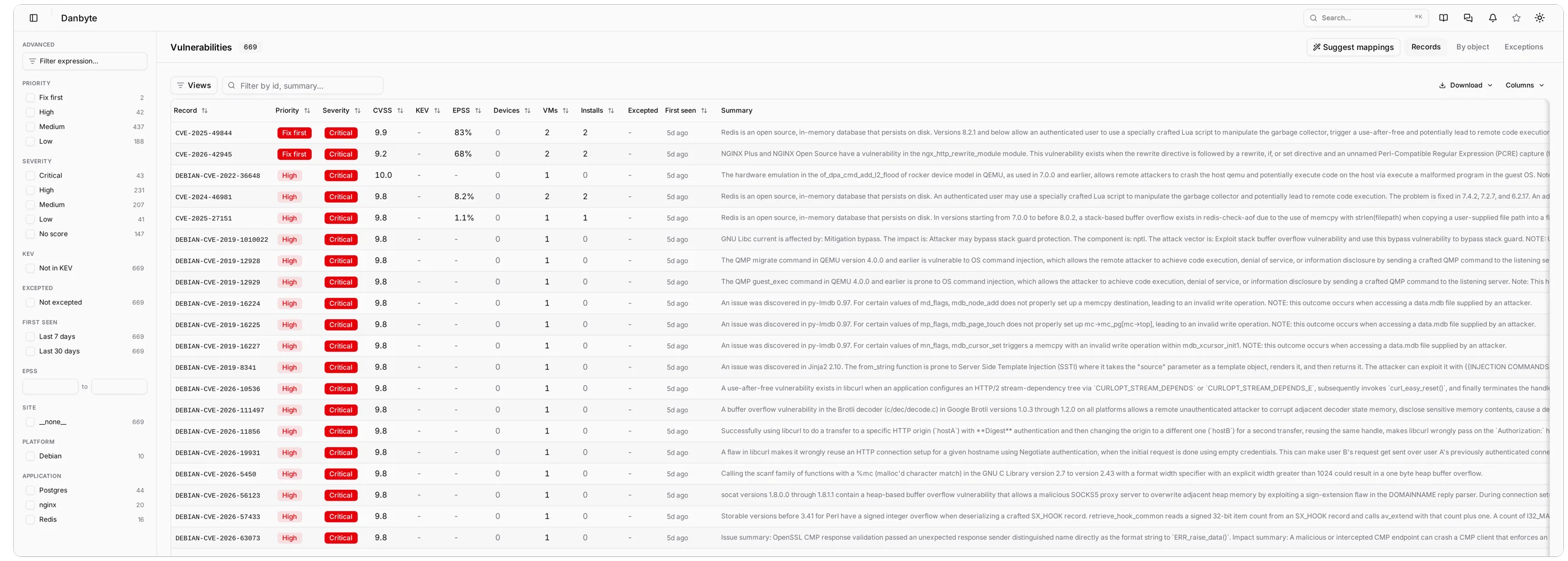
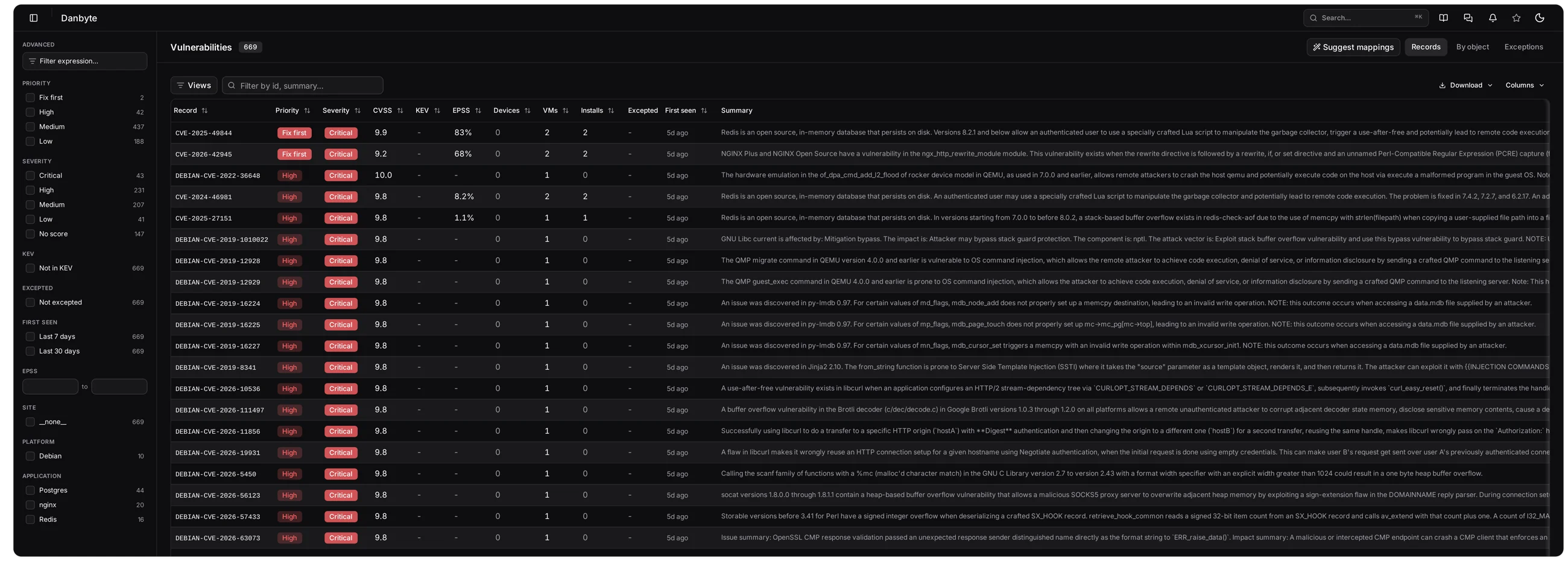
Each device, VM and piece of installed software now shows its known CVEs, with the CVSS score, the EPSS score and whether the CVE is on CISA's list of known exploited vulnerabilities. Danbyte matches them from NVD and OSV, and from the distribution's own advisories once Discovery has read a host's packages. You map a platform, application or device type to its public product yourself, or let Suggest mappings propose them.
Some vulnerabilities you will decide to live with. An exception has an owner and an expiry date, so it comes back for review instead of being forgotten. There is also a priority policy per tenant, notifications, a Known vulnerabilities compliance check and a CycloneDX VEX export.
The vulnerability list, sorted by priority, with severity, CVSS and EPSS.
Device dependencies
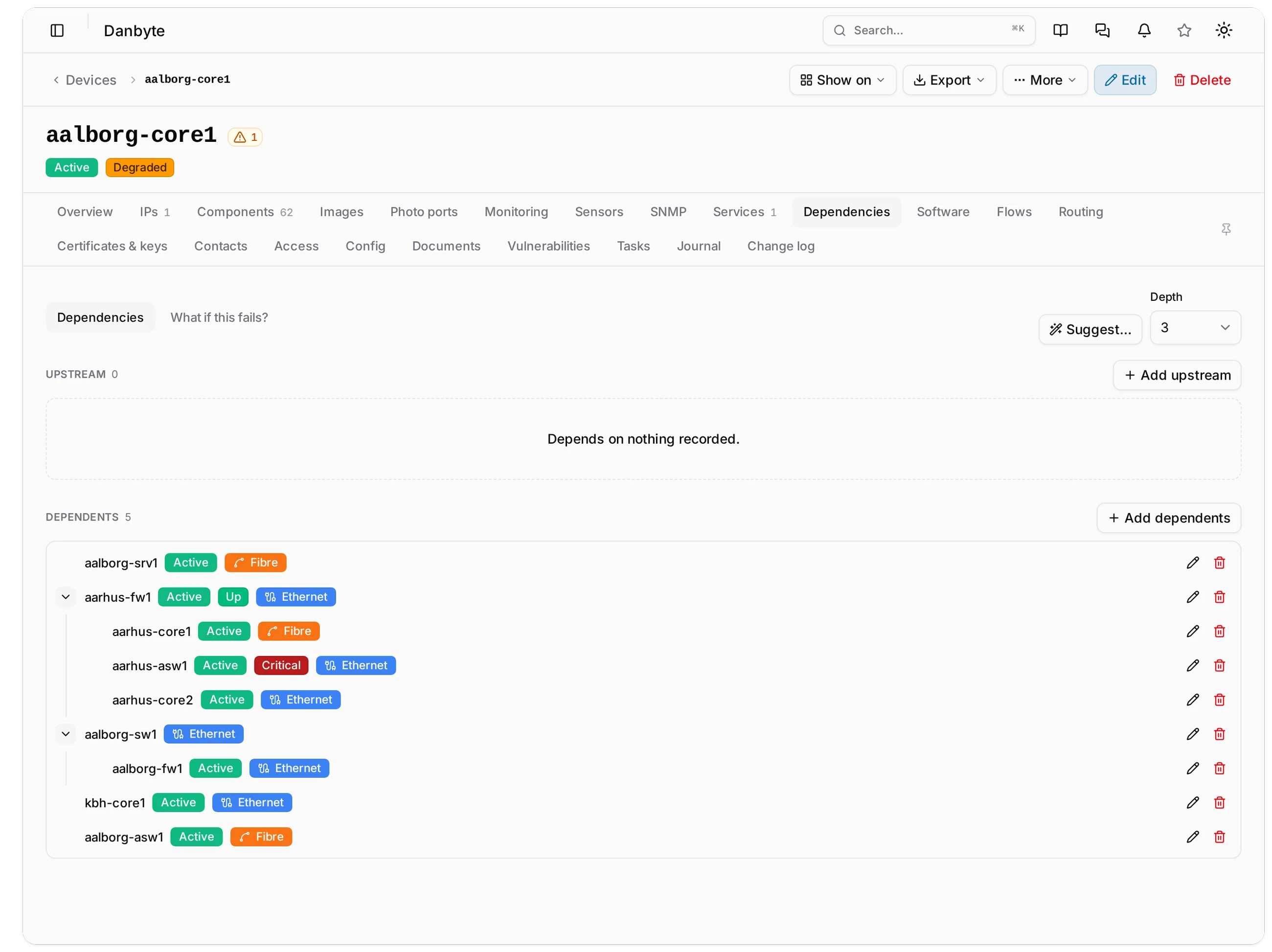
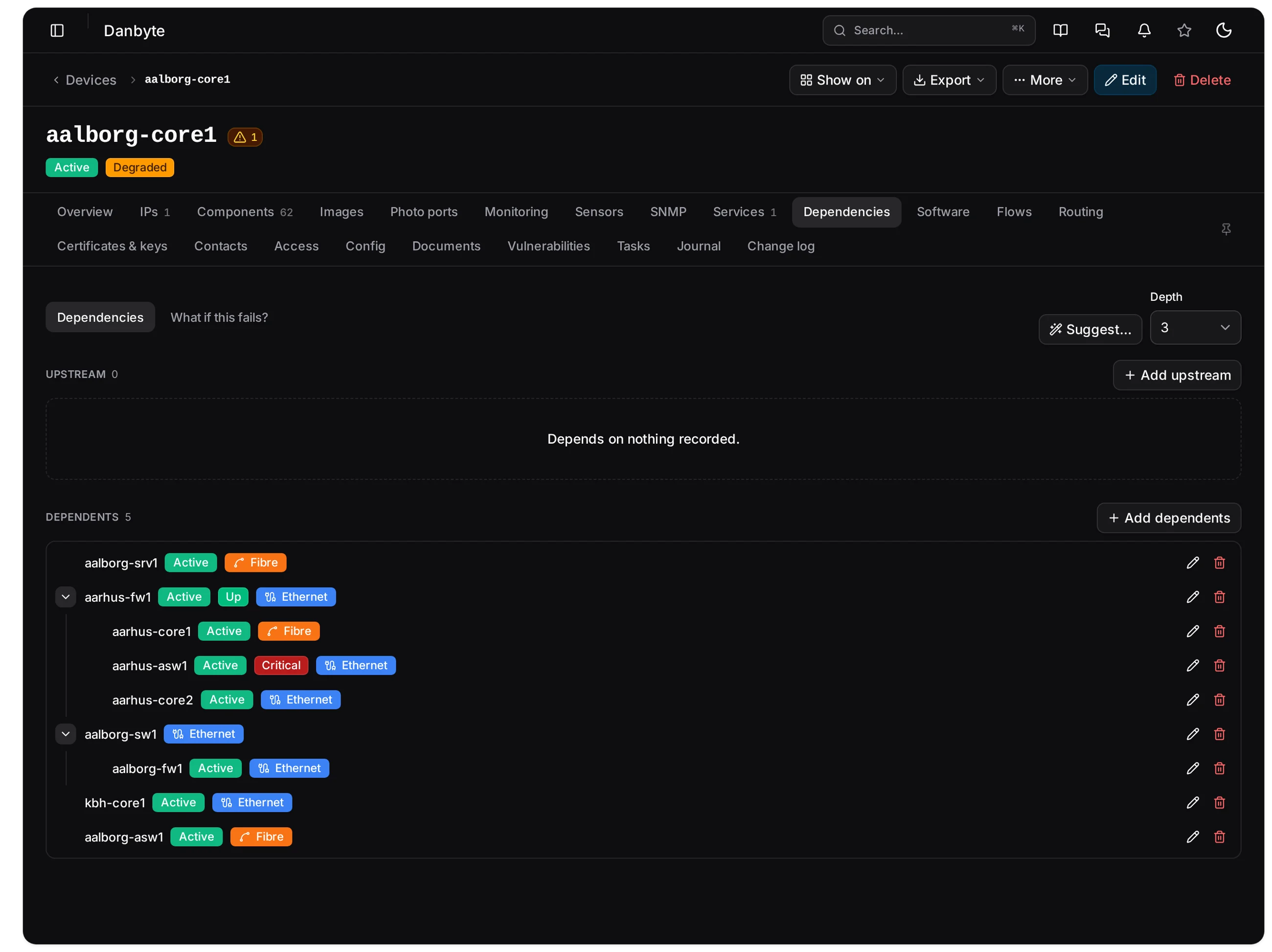
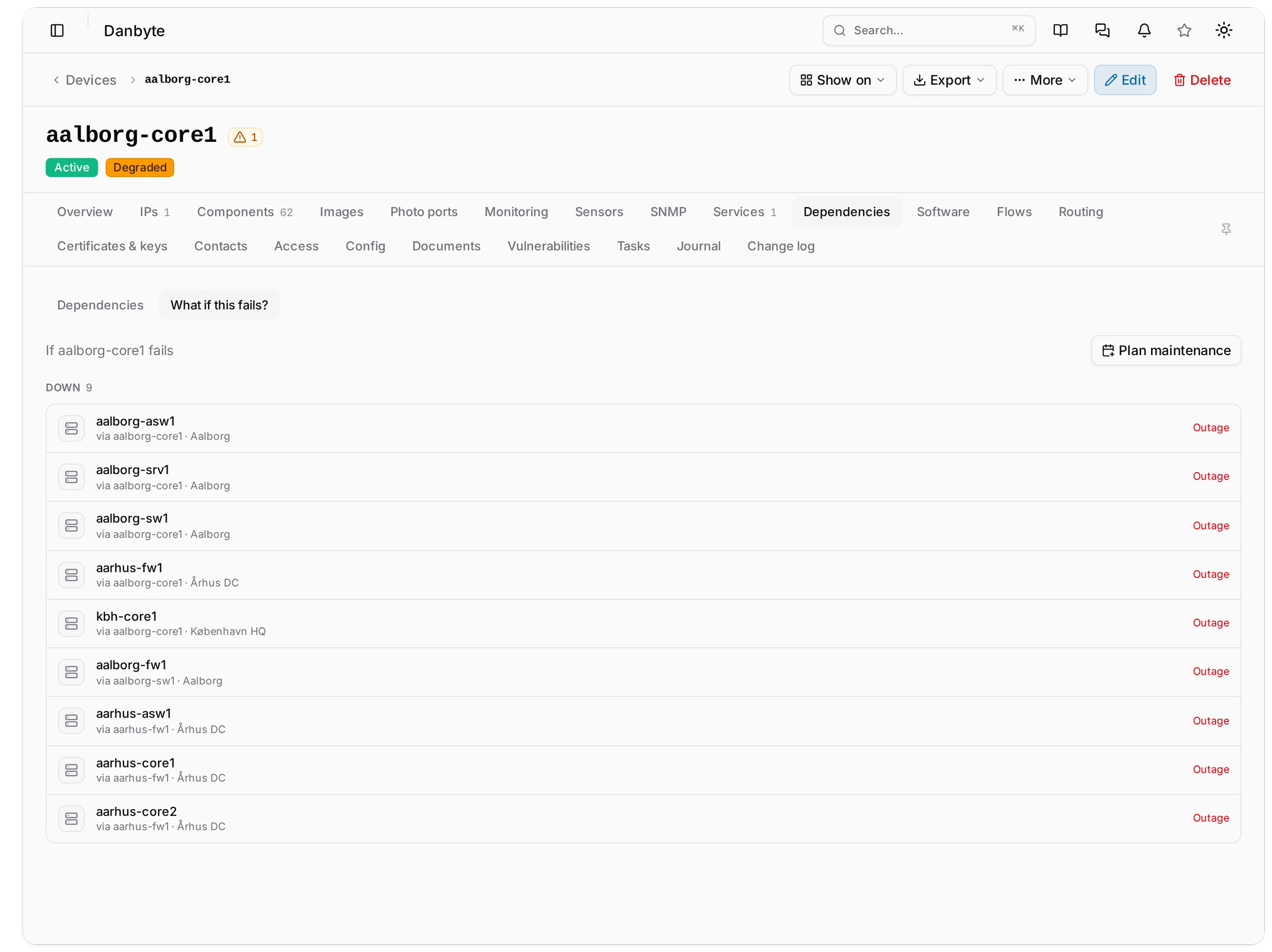
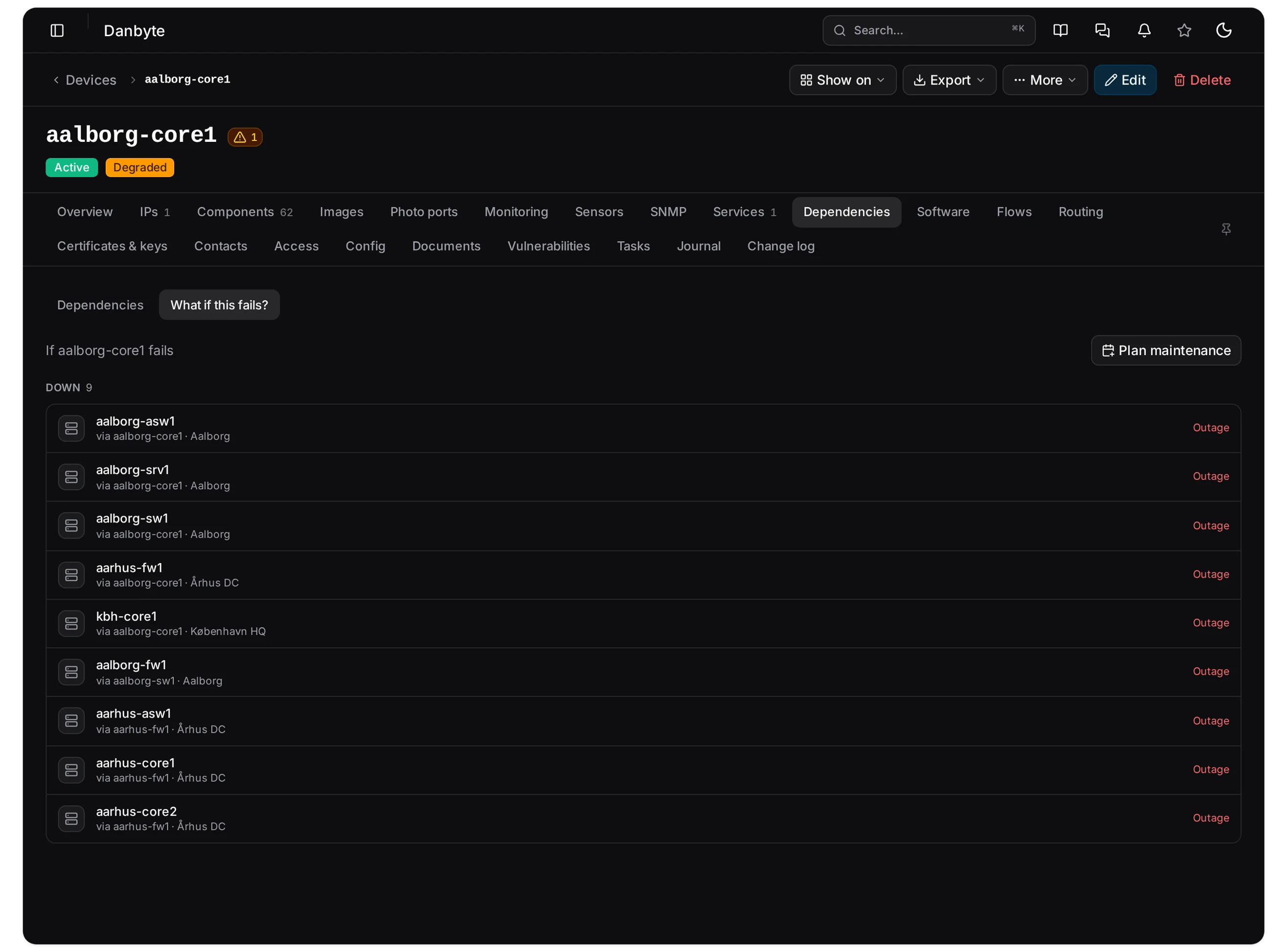
You can now record that a device depends on another one, over Ethernet, fibre, radio, VPN, LTE/5G or satellite, with redundancy groups where there is more than one path. Suggest proposes dependencies from cables, through patch panels, and from LLDP, and you confirm each one.
What if this fails? on a device lists what goes down if that device fails and what loses its redundancy. From that list you can plan a maintenance event. When an upstream device really does go down, you get one root-cause alert instead of one alert for every device behind it. The upstream device's own alert still goes out at once, and when Danbyte isn't sure, it alerts as it did before.
Discovery
Discovery stays off until a deployment admin and a tenant admin have both turned it on. Package inventory logs in over SSH and reads the OS release and the installed packages on Debian, Ubuntu, RHEL-like systems, Alpine and openSUSE Leap. Windows hosts are read over SSH or WinRM. The service scan checks common TCP ports and reads banners, TLS certificates and SSH keys. What it finds waits under Findings for you to accept or ignore. Discovery has only been run against a few real hosts so far, so try it on a test host first.
Also in 0.20
- A prefix tree beside the prefix and IP address lists, and free space, Next available and a subnet planner in the prefix list.
- The buttons in page headers come in the same order everywhere: page actions, Export, More, then Add, Edit and Delete.
- Monitoring has its own section in the sidebar.
- Vulnerability lists stay fast with hundreds of thousands of open matches.
- Hardening: a Content Security Policy, only TLS 1.2 and 1.3 in the nginx template, rate limits on sign-in, and sandboxed systemd units.
- Fixes since the last development release, including OIDC sign-in on bundle installs.
Before you upgrade
Check any scripts that call the API. A list request with a parameter Danbyte doesn't know now gets a 400 that names it, where the parameter used to be ignored. Add ?strict=0 to skip the check for one request, or set API_STRICT_QUERY_PARAMS=0 to turn it off for the whole install. The full notes are on the v0.20.0 release.