
Self-hosting is first-class.
Danbyte is built to be run by you. 100% of the features, on your own hardware, with no phone-home and no expiring license. It runs fully air-gapped if that is your world, and stands up on a single server in an afternoon.
One line on a fresh Ubuntu or Debian box.
The bootstrap resolves the latest release, verifies its SHA-256, then installs PostgreSQL, Redis, nginx with TLS and the systemd units, and generates the admin login for you. Pin a version with DANBYTE_VERSION, or download the bundle and run its ./install.sh air-gapped.
$ curl -fsSL https://danbyte.net/install.sh | bash -s -- --host danbyte.example.com# resolves the latest release and verifies its SHA-256# installs PostgreSQL, Redis, nginx + TLS and the systemd units# generates the admin login and prints it at the end# then: open https://danbyte.example.com and sign in# pin a version$ curl -fsSL https://danbyte.net/install.sh | DANBYTE_VERSION=0.14.1 bash -s -- --host danbyte.example.com
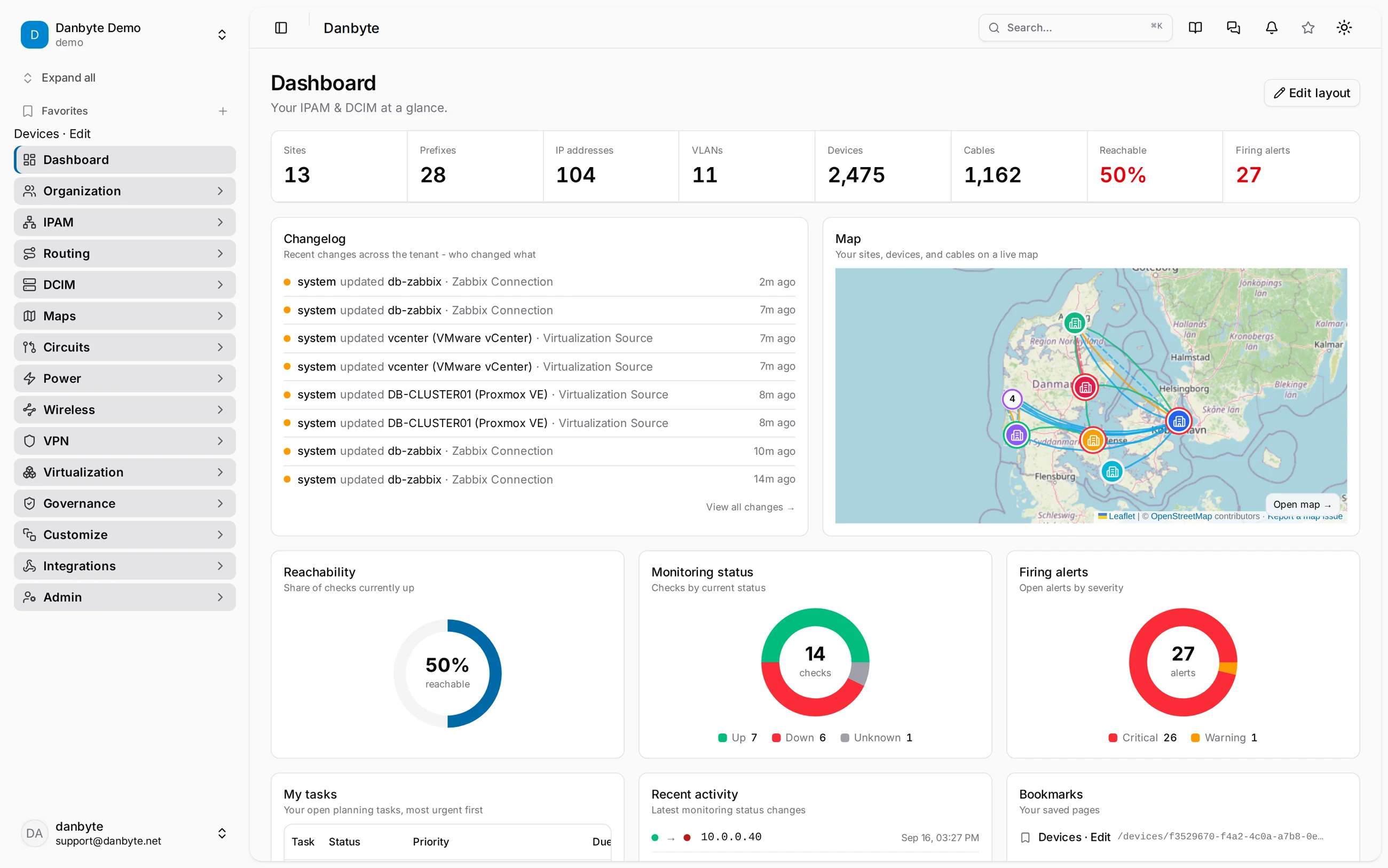
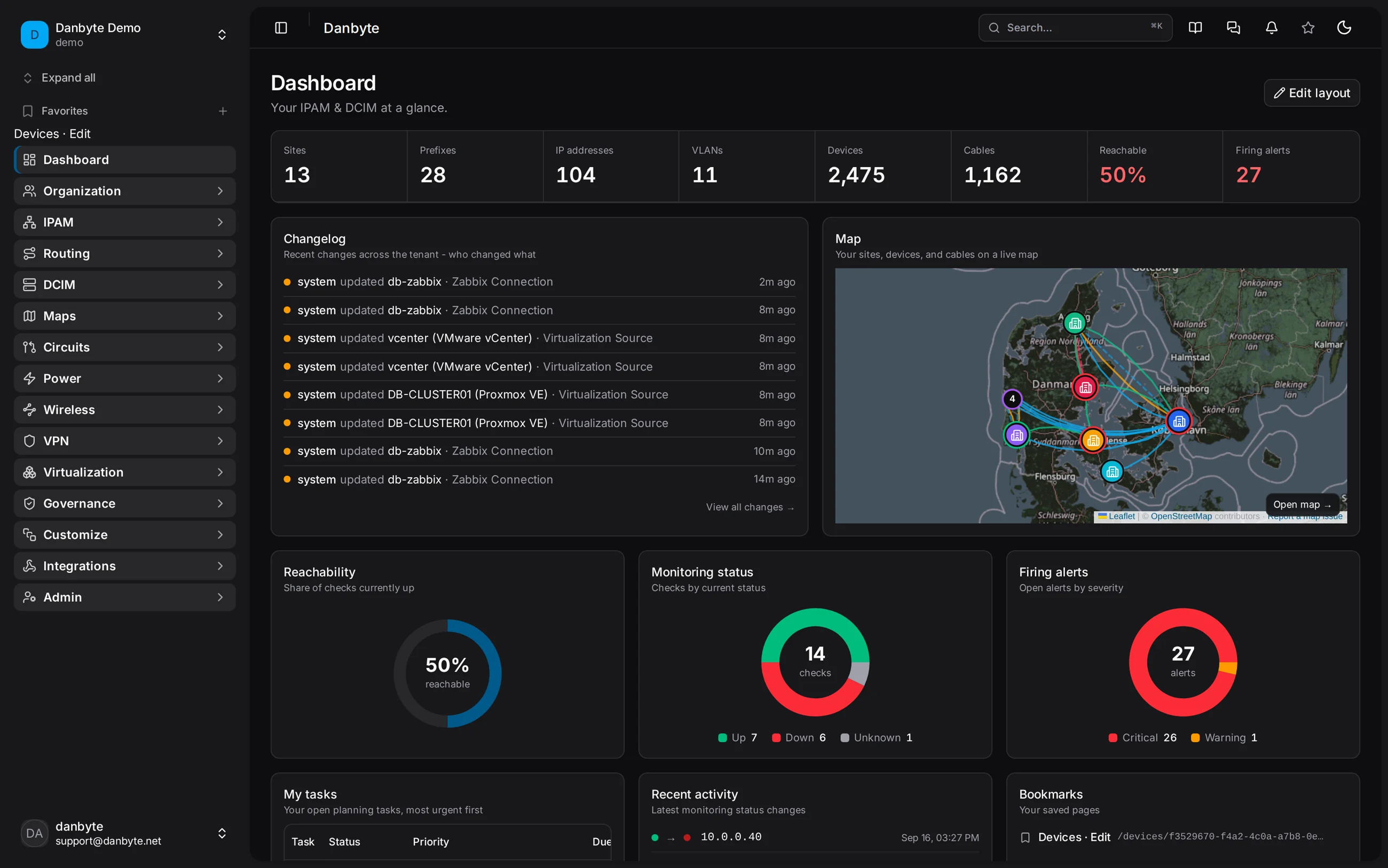
Not a limited edition.
It is the product.
A boring, dependable stack you already know how to run
Danbyte runs as a few small processes anywhere Django runs. The production processes install as user-level systemd units, and the whole thing fits on one server.
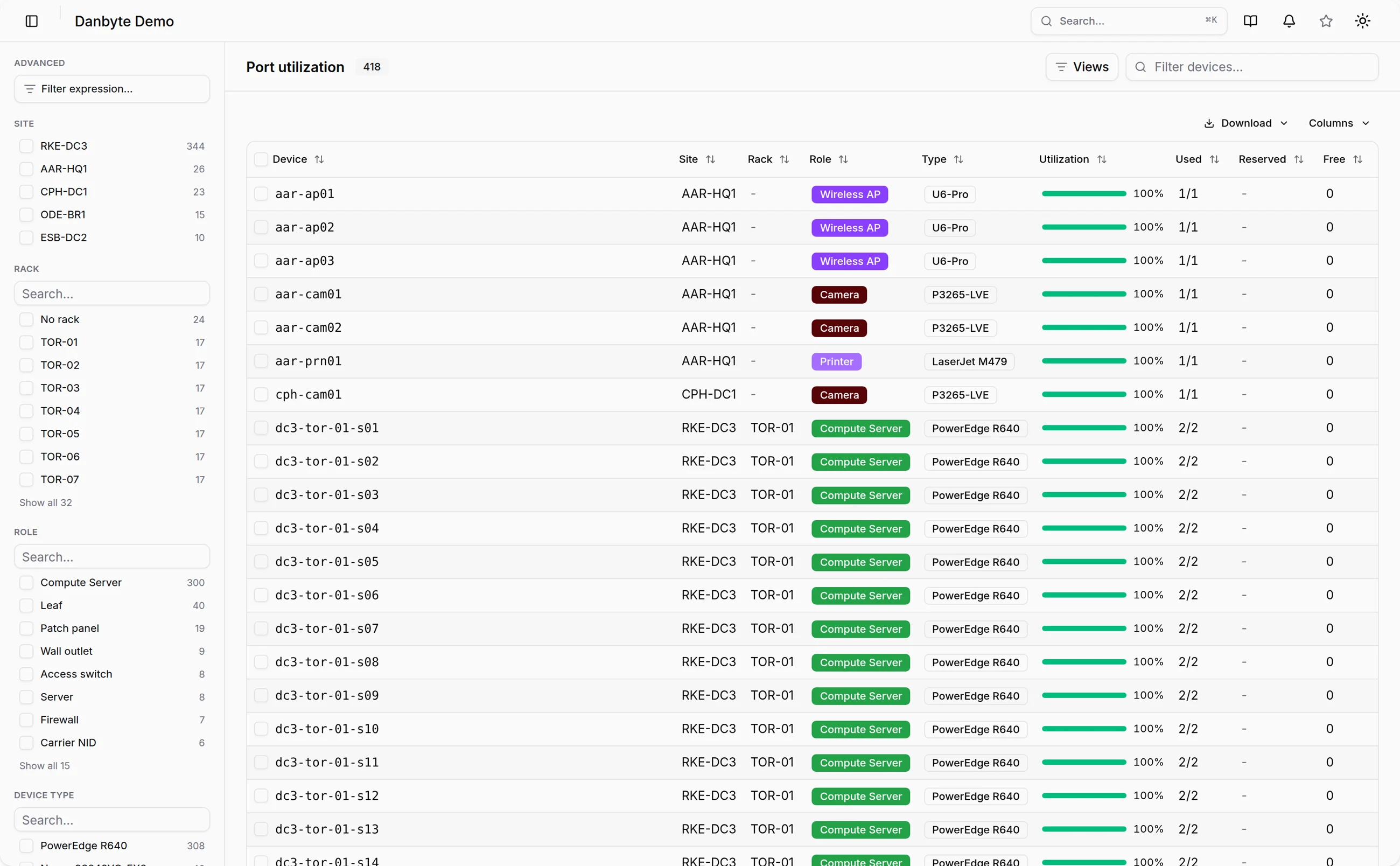
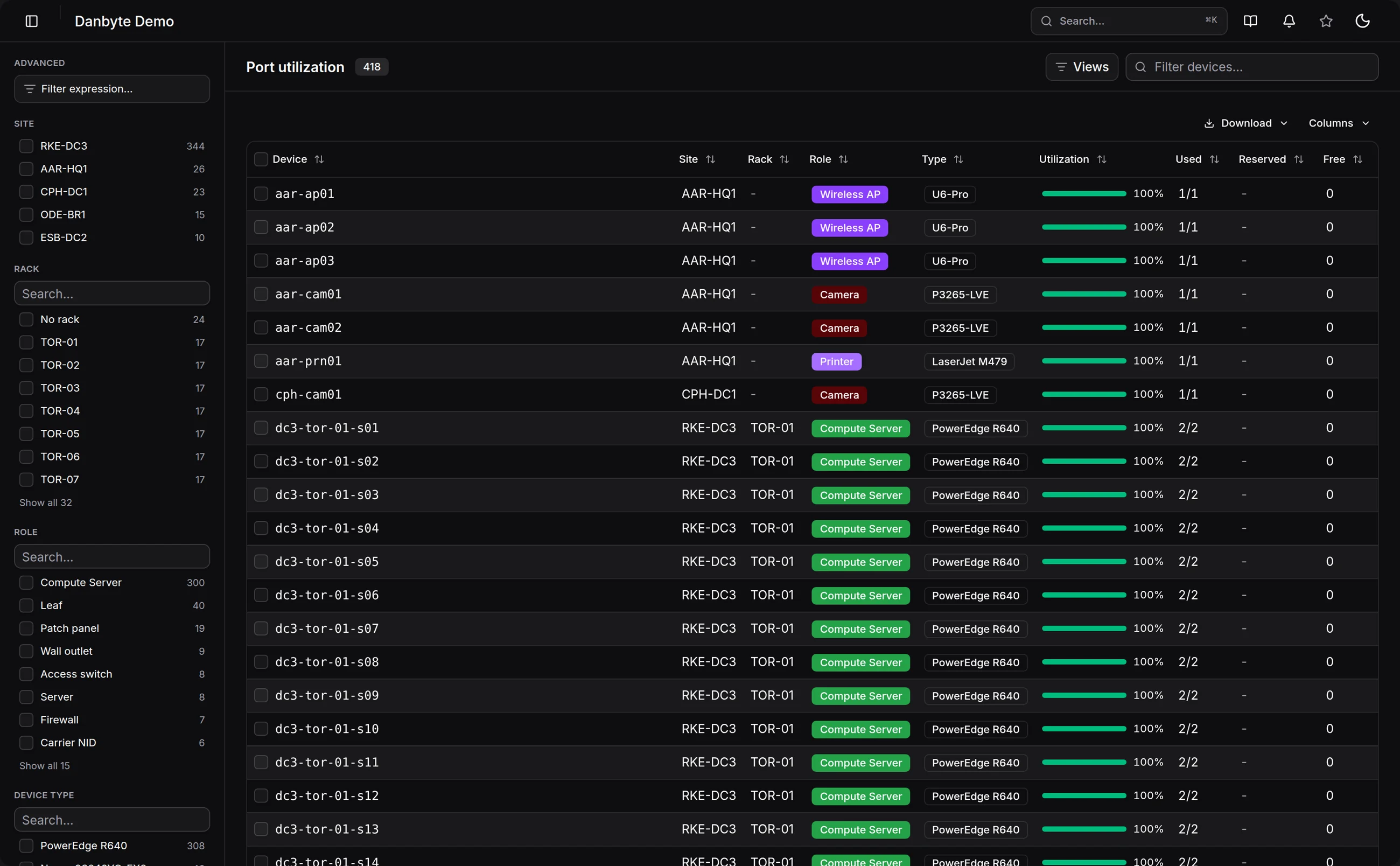
The only differences from Danbyte Cloud.
Identical software. These rows are everything that changes when we run it for you, including the exit ramp: export in CSV, XLSX or JSON and self-host again anytime.
| Capability | Self-hosted | Danbyte Cloud |
|---|---|---|
| Software | The full open-source Danbyte | The exact same open-source Danbyte |
| Features | 100% — everything | 100% — identical, nothing extra or withheld |
| Price | Free, forever | Paid managed hosting (ops, not software) |
| Who runs it | You (your server / VM) | We do — a private instance just for you |
| Updates & upgrades | You apply them | We apply them for you |
| Backups | You configure them | Automated by us |
| Uptime & monitoring | Your responsibility | Managed, monitored uptime |
| TLS / domain | You set it up | Provisioned for you |
| Infra (Postgres, Redis, workers) | You provision & maintain | Fully managed |
| Your data | On your hardware | Your private instance; exportable anytime |
| Air-gapped / offline | Fully supported | N/A (hosted) |
| Lock-in | None | None — export and self-host anytime |
Every feature listed anywhere on this site is in both columns. Danbyte Cloud is managed hosting of the same free software.
You hold the levers,
and the responsibility.
- 01Updates and upgradesPull a new release, run migrations, restart the units. On your schedule.
- 02BackupsBack up PostgreSQL and your media with whatever you already use.
- 03Infra and processesProvision Postgres, Redis and the gunicorn, daphne and worker processes, sized to your load.
- 04TLS and accessTerminate TLS at your reverse proxy and wire up LDAP or MFA to taste.
- 05MonitoringKeep an eye on the units and the queues. Danbyte's own checks help.
- 06Documented throughoutThe docs cover install, the nginx proxy, settings and day-two operations.
Would rather not run it yourself? Cloud is coming.
Danbyte Cloud will run the exact same open-source software as a private instance for you. Same features, no lock-in, export anytime. Start self-hosted now and move over with a plain export when it opens.